Sanitary Sewer & Wastewater Treatment Services
The Town of Whiteland owns and operates its municipal Wastewater Treatment Plant, providing reliable wastewater collection and treatment services to the community. The facility utilizes a 100% biological treatment process, specifically an extended aeration activated sludge system, to ensure effective and environmentally responsible treatment.
The plant has a treatment capacity of 840,000 gallons per day and currently serves more than 2,000 customers.
Hours of Operation
Monday-Friday
8:00 a.m. to 5:00 p.m.
To report a sanitary sewer issue during regular business hours, please call:
📞 (317) 535-5531
Sewer Department Contact Information
For questions or concerns related to:
- Sanitary Sewer Collection System
- Lift Stations
- Wastewater Treatment Plant
Please contact the Sewer Department Superintendent:
📞 Office: (317) 535-7627
📱 Mobile / After Hours: (317) 557-2955
📧 Email: Jjones@whiteland.in.gov.
Utility Billing Inquires
If you have a question about your utility bill or to request information:
📞 (317) 535-5531
📧 Thampton@whiteland.in.gov.
Fats, oils, & grease (FOG)
Fats, oils, & grease, when washed down the drain, can cause serious problems for sewer lines, including blockages, overflows, and contamination of local waterways. We encourage all residents to clink on the link below for tips to help keep our sewer lines clean!
Inflow & Infiltration
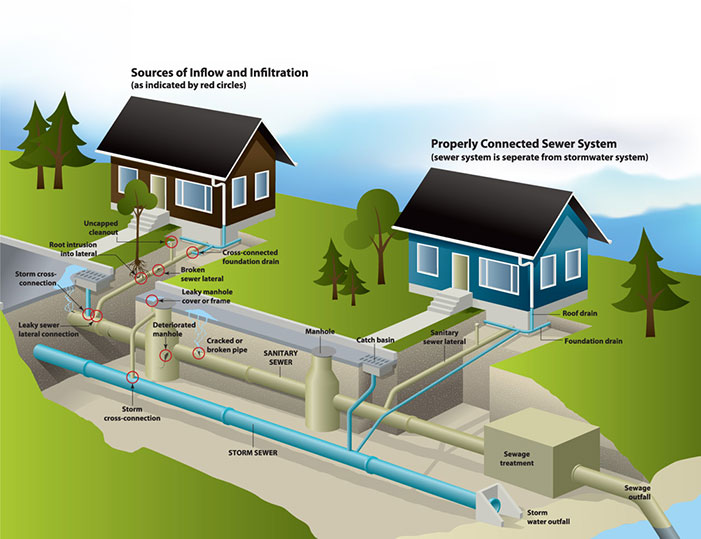
Inflow and infiltration happens when water from the environment enters the sewage system for treatment.
The Town of Whiteland has two sewer systems:
- Sewage system (sanitary sewer)
- Storm sewer
The sewage system is designed to carry sewage to the treatment plant for processing before returning it to the environment. The storm sewer prevents streets from flooding by draining and carrying excess stormwater (water from rainfall and snowmelt) to lakes and streams.
What is Inflow and Infiltration?
Inflow happens when stormwater enters the sewage system through sump pumps or downspouts still connected to the sewage system instead of the storm sewer.
Infiltration happens when water or groundwater from beneath the earth’s surface enters the sewage system through damage or defects such as holes and cracks in sewer pipes.
Inflow and Infiltration Diagram